


ISO 50001
ISO 50001 implementation
in your company
We help businesses implement an ISO 50001-compliant energy management system by structuring their data, roles, performance indicators, energy review and energy-related decision-making. We prepare organisations for certification and ongoing, systematic energy management.
For many businesses, energy is a significant cost, yet it is still managed reactively: through invoice reviews, isolated upgrades, responses to price increases or action only when a problem arises.
ISO 50001 helps bring energy management under a consistent framework across the organisation. It replaces ad hoc measures with ongoing energy management based on clear responsibilities, measurable indicators, energy reviews and regular performance evaluation.
Energy Trend helps turn ISO 50001 requirements into practical energy management processes.
EXPERTISE AND SCOPE
ISO 50001 brings together data, processes and energy management
Experience delivering B2B energy projects
We deliver energy projects for manufacturing, industrial and logistics businesses.
Data-driven implementation and performance indicators
We base implementation on the organisation’s energy data, performance indicators and processes, not just management-system documentation.
Expertise in energy audits and energy efficiency
We combine the requirements of ISO 50001 with experience in company energy audits, energy efficiency and business energy projects.
Putting standard requirements into practice
We help translate ISO 50001 requirements into practical energy management methods, defined roles, accountability and operational decisions.






WHO IT IS FOR
Who can benefit from implementing ISO 50001?
ISO 50001 implementation is particularly valuable where energy is a significant cost, data is scattered and the company wants to manage energy continuously rather than relying on occasional analyses or upgrades.

Manufacturing plants and industrial companies
Businesses with significant energy consumption, multiple energy carriers and production processes that need consistent ways to manage data, indicators and energy-related decisions.

Retail chains and multi-site businesses
Businesses operating at several locations with dispersed energy data. ISO 50001 standardises energy management while accounting for differences between sites.
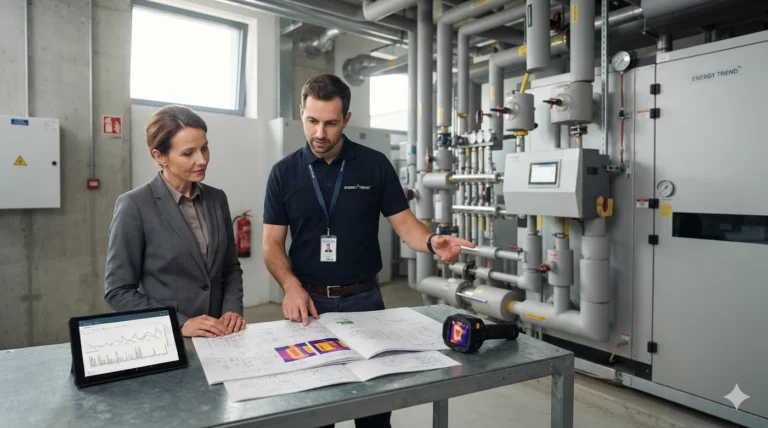
Businesses moving from energy audits to systematic management
Businesses that already have a company energy audit, analyses or consumption data and want to move from periodic assessments to continuous, systematic energy management.

Businesses preparing for ISO certification
Organisations seeking ISO 50001 certification that have not yet established an energy management system aligned with the standard.

Businesses adapting to changing legal requirements
Energy-intensive businesses that may be required to implement a certified energy management system under EU Directive 2023/1791 and applicable national implementing legislation.
Not sure whether ISO 50001 is the right approach for your business?
ISO 50001 OR A COMPANY ENERGY AUDIT
ISO 50001 and company energy audits: what is the difference?
A company energy audit (AEP) and ISO 50001 serve different purposes. An audit identifies where the company uses energy and opportunities for improvement. ISO 50001 establishes how energy is managed on an ongoing basis, using data, defined responsibilities and performance indicators.
Company Energy Audit
ASSESSMENT — identifies the current situation, losses and opportunities for improvement.
Energy Management System
MANAGEMENT — establishes how energy is managed throughout the organisation.
Where does the business use energy, and what should it improve?
How should the business manage energy continuously and measure results?
Periodic assessment of consumption, losses and savings opportunities.
An ongoing system for managing data, roles, indicators and reviews.
Recommendations for measures, upgrades and priorities.
Roles, procedures, KPIs and a continual improvement cycle.
When the business needs to establish its baseline and make decisions.
When the organisation wants systematic energy management or is preparing for certification.
IMPLEMENTATION SCOPE
What ISO 50001 implementation includes
Implementing ISO 50001 involves more than preparing certification documents. It establishes how a business manages energy: from data and responsibilities to energy reviews, objectives and operational practices in areas that affect energy consumption.
Assessing the starting point
We begin by examining how the business manages energy today: what data is available, who is responsible for it, what metering is in place, which practices already exist and what must be improved before implementation.
System scope and organisational boundaries
We agree which sites, processes, energy carriers and organisational areas will be covered. This defines a clear scope instead of assuming that the system will simply cover everything.
Legal and other energy-related requirements
We help organise legal, regulatory, contractual and internal requirements relating to energy use, energy efficiency and compliance evaluation.
Energy policy and organisational responsibilities
We help define the energy policy, roles and responsibilities so it is clear who owns the data, decisions, actions and system oversight.
Indicators, objectives and baselines
We establish how the business will measure its energy performance: which indicators it needs, what baselines to use and which energy objectives make sense for the organisation.
Energy data monitoring and analysis
We structure the collection and analysis of energy data so the business can regularly evaluate performance and make informed decisions rather than relying on assumptions.
Energy considerations in procurement, design and investment
We establish procedures for considering energy performance when purchasing energy, services or equipment, making upgrades and designing technical changes.
Documentation aligned with the standard
We prepare the documentation required by the standard and tailor it to the way the business operates. Documents should support the system, not become a separate collection of files created solely for an audit.
Preparing the team to operate the system
We prepare management, technical and operational staff to work within the system, especially those whose activities affect energy consumption or the data used to assess it.
Checking readiness for certification
We help the organisation prepare for an internal assessment before certification by organising findings, corrective actions, management-review materials and any elements needing further work before the certification body’s assessment.

We tailor implementation to the business’s circumstances: its number of sites, process complexity, available data and starting point. No single template works for every facility.
IMPLEMENTATION PROCESS
How we implement ISO 50001
We assess the starting point
We begin with a discussion of the business, its sites, energy consumption, available data, metering, responsibilities and objectives. Both decision-makers and technical staff should be involved, as ISO 50001 concerns organisational processes as well as energy data.
We define the scope and work plan
We determine what the system should cover, which areas matter most and how responsibilities will be shared between Energy Trend and the client. We also identify the decisions, data and people needed at subsequent stages.
We organise data, responsibilities and operating practices
We work with the organisation to improve how energy data is collected, analysed and used. We define roles, indicators, objectives and performance-monitoring procedures.
We prepare documentation and introduce system procedures
We create the documentation required by the standard and help integrate it into everyday operations, so the system is connected to actual processes rather than existing only as files.
We check certification readiness
Before the certification body’s assessment, we check whether the system is complete, documents and records are in order, required internal activities have been carried out and the team understands the agreed procedures.
We can provide support after implementation
Once implementation is complete, we can help the organisation maintain the system, prepare for audits, address corrective actions and continually improve its energy management.
WHEN IT HELPS / WHEN IT IS REQUIRED
When is ISO 50001 worthwhile or mandatory?
The first step is to assess energy consumption. For enterprises exceeding the threshold set by EU Directive 2023/1791, ISO 50001 is more than an organisational choice: the Directive requires a certified energy management system to be implemented.
Average over the previous 3 years, taking all energy carriers into account.
Requirement to implement a certified energy management system
The Directive sets a deadline for having the system in place by 11 October 2027.
ISO 50001 is the standard approach to implementing a certified energy management system.
Below the threshold, ISO 50001 can still be worthwhile when there are:
The 85 TJ threshold relates to energy consumption, not company size
This represents an important shift: the relevant measure is average annual consumption over the previous three years across all energy carriers.
In practice: calculate the average before beginning preparations for implementation.
INITIAL INFORMATION
Basic information is enough for the first conversation
You do not need completed documentation or comprehensive metering. Initially, we only need to understand the business’s starting point; we can address the remaining details together in subsequent steps.
4 things we need for the first conversation
industry, type of operations and number of sites
approximate consumption and energy carriers used
who is responsible for energy and what metering is in place
whether there are existing audits, analyses, energy monitoring or other ISO systems
Helpful, but not essential at the outset
If you have any of these, great. If not, we can still get started.
company energy audit
energy consumption summaries
data from metering systems
invoices or cost reports
information about previous upgrades
documentation for existing ISO systems
Don't have everything? We can still talk.
We begin with a brief assessment of the organisation, then identify and complete any missing information in the subsequent stages.
IMPLEMENTATION RESULTS
What a business receives after ISO 50001 implementation
After implementation, the company has an established energy management system for everyday use, with defined responsibilities, data, indicators, objectives, documentation and operational procedures.
The business knows who is responsible for energy, which data to use, what to monitor, which objectives to pursue and how to evaluate results.
- an agreed scope for the energy management system,
- an energy policy and clearly defined roles and responsibilities,
- organised legal and other energy-related requirements.
- an energy review identifying the main areas of energy use,
- procedures for collecting, monitoring and analysing energy data.
- agreed energy performance indicators, baselines and objectives,
- procedures for evaluating results and considering energy in procurement, investment and technical changes.
- system documentation meeting ISO 50001 requirements,
- a prepared team and organised materials for the certification process.
Certification is carried out by an independent certification body. Energy Trend implements the system and prepares the organisation for this process, but does not act as the certification body.
FAQ
Frequently asked questions
Brief answers to questions
many businesses ask before contacting us.
Can’t find your question here?


Does ISO 50001 make sense if the company has not yet organised its energy data?
Yes. You can begin implementation even if your data is not yet fully organised. For many businesses, this is precisely where the work starts: identifying available data, its owners, gaps and how energy consumption should be monitored in future.
We do not expect a fully developed system at the outset; our role is to help establish it. During implementation, however, it is important to define reliable methods for collecting, monitoring and storing data so the system works in practice, not just on paper.
Is incomplete metering a problem?
Not necessarily at the outset. Incomplete metering does not prevent a company from starting ISO 50001 implementation. During planning, we identify which data is sufficient initially, which areas need attention and what will need to be measured or analysed later.
Ultimately, however, the system must rely on data that allows energy performance and the outcomes of improvement measures to be assessed reliably.
Is a company energy audit required before implementing ISO 50001?
Not always, but a company energy audit is often a valuable starting point. It identifies where energy is consumed, which areas are significant and where efficiency improvements may be possible.
An energy review is a key requirement of ISO 50001. It can draw on data and findings from a company energy audit, but it forms part of an ongoing energy management system rather than a one-off report.
How does ISO 50001 implementation differ from certification?
Implementation prepares a business to operate in line with ISO 50001 requirements by organising its data, responsibilities, indicators, objectives, documentation and energy management procedures.
Certification is a subsequent assessment of the system by an independent, accredited certification body. Energy Trend implements the system and prepares the organisation for this stage but does not issue certificates.
Does Energy Trend guarantee ISO 50001 certification?
We cannot guarantee the decision of the certification body, because certification is performed by an independent, accredited body. The outcome depends not only on the scope of implementation but also on data completeness, organisational commitment, compliance with established procedures, maintenance of records and how the company operates its system.
Energy Trend’s role is to implement an ISO 50001-compliant energy management system, organise documents and records, prepare staff and identify matters that need attention before the certification audit.
This enables the business to approach certification in a structured, informed way. The final assessment of conformity with the standard rests with the certification body.
Who should be involved in the implementation on the company's side?
The involvement of both decision-makers and technical staff is usually needed: senior management or the person responsible for organisational decisions, the energy manager, maintenance, production, procurement, investment, controlling and data owners.
In practice, it is advisable to appoint an energy management lead or team to coordinate data, decisions, actions and communication within the business. ISO 50001 is not just a technical project; it also requires organisational decisions, resources and clear accountability.
What information is enough for an initial discussion?
Basic information is sufficient to begin: what the company does, how many sites it operates, which energy carriers it uses, the approximate scale of consumption and whether it already has a company energy audit, metering data or other ISO management systems.
Full documentation is not needed at this stage. The first discussion helps identify the starting point and determine whether ISO 50001 is the right approach.
Does ISO 50001 implementation mean a lot of extra work for our team?
Implementation requires input from the company, but the entire workload should not fall on the client’s team. We lead the process, specify the data needed, organise the next steps and prepare the company to operate the system.
The level of involvement depends on the organisation’s size, number of sites, data availability and starting point. The clearer the initial allocation of roles and responsibilities, the smoother implementation can proceed.
How long does ISO 50001 implementation take?
It depends on the size of the company, number of sites, data availability, metering coverage, existing systems and the scope of the proposed energy management system.
Implementation usually takes months rather than days, but a specific schedule is agreed after assessing the situation. The initial analysis allows us to outline the work plan, responsibilities and sequence of activities.
Does ISO 50001 cover procurement, investment and the design of technical changes?
Yes. ISO 50001 covers not only the ongoing monitoring of energy consumption but also decisions that may affect future energy performance.
That is why the system should establish procedures for considering energy performance when purchasing equipment, services or energy, planning upgrades and investments, and designing technical changes.
Does implementation cover legal and other energy-related requirements?
Yes. Implementation includes organising legal and other requirements concerning energy efficiency, energy use, energy consumption and the energy management system itself.
We help identify the requirements relevant to the organisation and establish how compliance with them will be evaluated periodically.
Are an internal audit and management review needed before certification?
Yes. Before certification, the organisation needs evidence that the system operates, not just documentation. This typically includes an internal audit, management review, organised records, performance evaluation, identification of any nonconformities and corrective actions.
We help prepare the organisation for these activities so certification assesses a functioning system rather than merely reviewing documents.
Does ISO 50001 implementation guarantee lower energy costs?
No. ISO 50001 does not automatically guarantee lower energy costs or a specific level of savings. However, it helps organise data, responsibilities, indicators, objectives and actions so the business can better identify losses, evaluate results and make evidence-based decisions.
Actual outcomes depend on the starting point, consumption levels, data quality, investment decisions and consistent implementation of measures.
Can ISO 50001 replace the periodic company energy audit?
Under Polish law, in certain cases, a certified ISO 50001-compliant energy management system that includes regular energy reviews of the required scope may provide an alternative to the periodic company energy audit.
This must not be assumed automatically. It depends on the legislation in force, the system’s scope, the validity of certification and whether regular energy reviews are conducted within the system to the required extent.
Will ISO 50001 be mandatory for our business?
This depends on average annual energy consumption and the legislation currently in force. EU Directive 2023/1791 and national legislation transposing it shift the emphasis from company size to energy consumption.
The Polish draft legislation UC77 specifies, among other things, a threshold of 23.61 GWh / 85 TJ of average annual energy consumption over the previous three years, taking all energy carriers into account, for the requirement to implement a certified energy management system. Details should be checked on the separate regulatory page, as national legislation may change.
Can ISO 50001 be integrated with other ISO management systems?
Yes. ISO 50001 can be implemented as a standalone system or integrated with existing management systems such as ISO 9001, ISO 14001 or ISO 45001.
In practice, some common mechanisms can be shared, including document control, internal audits, corrective actions, management reviews, competence and communication. However, the energy-specific elements, such as the energy review, significant energy uses, indicators, baselines and data collection plan, require separate development.
What does the company receive after ISO 50001 implementation?
Implementation results in a structured energy management system within the agreed scope: defined roles and responsibilities, an energy policy, energy review, significant energy uses, indicators, baselines, objectives, a data collection plan, monitoring procedures, system documentation and records demonstrating that the system operates.
The company also receives organised materials needed for the certification process conducted by an independent certification body.
Can Energy Trend continue supporting us after implementation?
Yes. After implementation, we can support the company in maintaining the system, preparing for audits, training internal auditors, analysing nonconformities, taking corrective action and improving the energy management system.
Any involvement in internal audits is agreed in a way that preserves the objectivity and impartiality of the assessment.
What is the best first step?
The simplest first step is a short discussion of your starting point: energy consumption levels, the number of sites, available data, existing audits or ISO systems, and why the company is considering ISO 50001.
This provides a basis for deciding whether ISO 50001 implementation, a company energy audit or another preparatory measure is the most appropriate approach.
Have a question that isn't answered here?
Discuss ISO 50001 implementation at your company
Briefly describe your business, the number of sites, the scale of energy consumption and why you are considering ISO 50001. We do not need full documentation at the outset. The first conversation helps us establish your starting point and assess whether this approach makes sense.


+48 532 499 000

+48 881 554 655

audytor@energytrend.pl

Your data is secure. We reply within 1 business day.