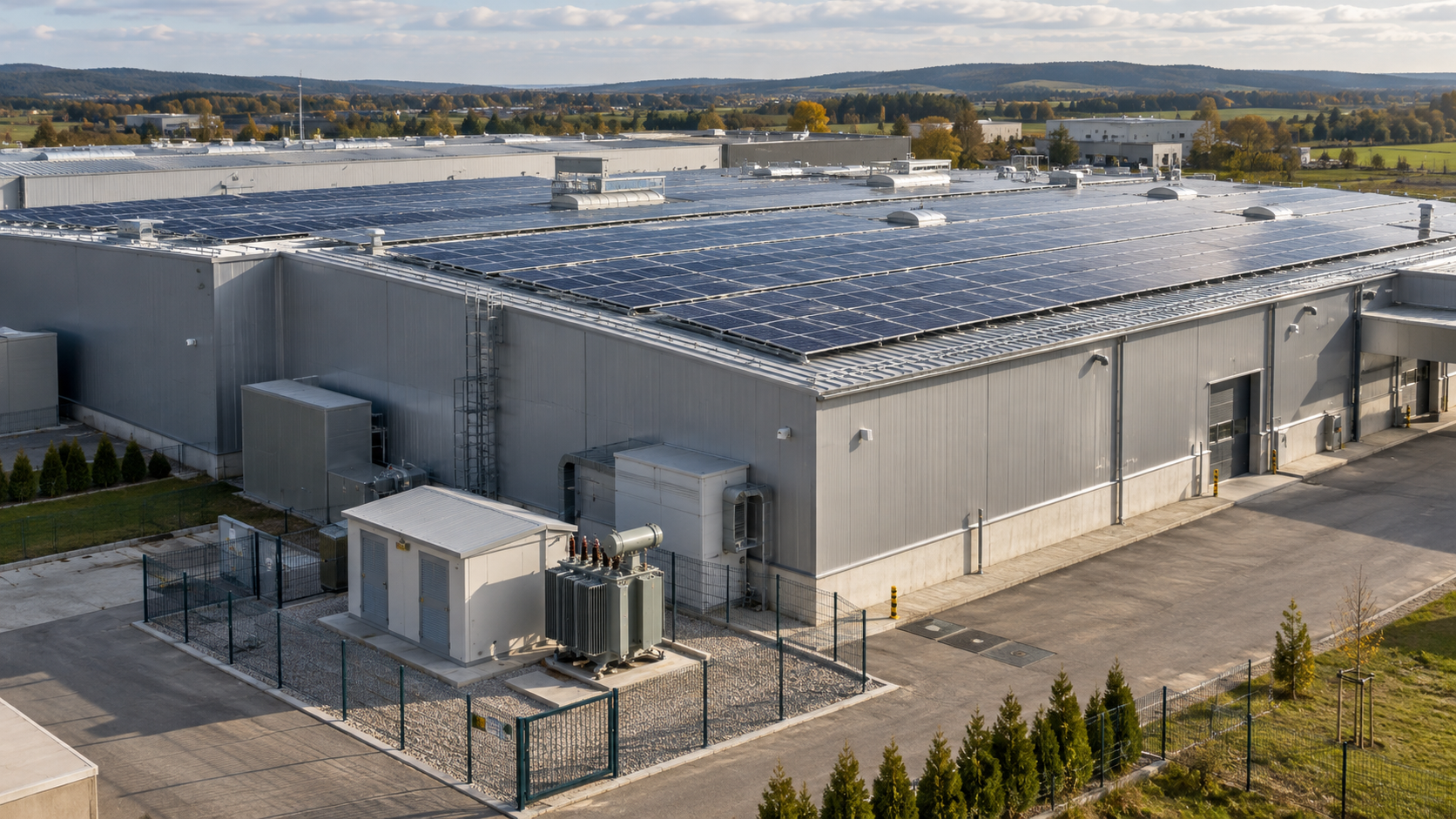
For businesses investing in energy efficiency in Poland, there is a real opportunity to achieve an additional return on their capital expenditure. This is possible through so-called Polish white certificates, i.e. Energy Efficiency Certificates. If you want to know how the application and sale process works, this article explains the key steps.
What are Polish white certificates?
Polish white certificates are Energy Efficiency Certificates issued by the President of the Polish Energy Regulatory Office (URE) under Article 22 of Poland’s Energy Efficiency Act. They confirm planned final energy savings, expressed in tonnes of oil equivalent (toe), where 1 toe equals 11.63 MWh or 41.868 GJ. Certificates are granted for energy-efficiency improvement projects, such as thermal retrofits, replacement of industrial equipment, lighting upgrades or energy recovery in industrial processes, that generate minimum savings of 10 toe per year.
Stages of obtaining Polish white certificates
The process of obtaining Polish white certificates begins by identifying an energy-efficiency improvement project that meets the requirements set out in Article 19 of Poland’s Energy Efficiency Act. An energy efficiency audit must be prepared to determine the potential final energy savings and the technical parameters of the planned upgrade, such as equipment efficiency factors or energy losses in processes.
Energy efficiency audits in Poland are prepared in accordance with the Regulation of the Minister of Energy of 5 October 2017 on the detailed scope and method of preparing an energy efficiency audit and methods for calculating energy savings (Journal of Laws, item 1912), taking into account the amendments introduced by the Regulation of the Minister of Climate and Environment of 12 April 2022 amending the Regulation on the detailed scope and method of preparing an energy efficiency audit and methods for calculating energy savings (Journal of Laws, item 956).
Application for a Polish Energy Efficiency Certificate
The application for a certificate, including the audit and the project’s technical and legal data, must be submitted to URE before signing a contract with the contractor and starting work. The President of URE has 45 days to verify the application, including the correctness of the energy-savings calculations and compliance with formal requirements. It should be noted, however, that the 45-day period is only a formal deadline; in practice, the authority usually deals with the application only after the project has been completed and URE has been notified of its completion.
If the decision is positive, a certificate promise (promesa) is issued, confirming entitlement to the certificate once the project has been completed. After submitting the application to URE, the company proceeds with implementation in line with the audit assumptions. If the final parameters differ slightly from the audit assumptions, the application and audit must then be corrected. Failure to meet this requirement or starting work before submitting the application results in rejection, and in some cases a five-year ban on submitting applications.
Project implementation and sale of Polish white certificates
After completing the project, the company must verify whether the upgrade was carried out in accordance with the assumptions of the energy efficiency audit. For projects generating savings of more than 100 toe per year, a post-implementation audit is required to confirm the actual energy savings. In line with URE requirements, this audit may not be carried out by the same auditor who prepared the initial audit, in order to ensure objectivity.
After the completion notice has been submitted, together with the post-implementation audit (if required), URE performs its verification and then issues and registers the certificate.
The value of the certificates, expressed in PLN/toe, varies depending on demand, supply and the level of the substitute fee (in 2025, approximately 2,300–2,500 PLN/toe). Obligated entities, such as energy suppliers, purchase certificates to meet their energy-efficiency obligation, creating a stable market for them.
Other formal requirements for selling Polish white certificates
Selling Polish white certificates on the Polish Power Exchange (TGE) requires formalities such as obtaining membership in the Register of Certificates of Origin, which may take several months. Proceeds from the sale, covering an average of 30% of project costs (and in some cases even 100%), provide significant financial support, while the stable increase in certificate value (around 5% per year) makes them an attractive investment.
The process of obtaining and selling Polish white certificates is complex, but with proper preparation it can be highly profitable. It is an effective way to finance energy-efficiency measures in line with Poland’s legal and market requirements.