On 8 September 2026, the Managing Authority for the European Funds for Warmia and Mazury 2021–2027 programme announced that a new call had been added to the schedule under Measure 02.01 Energy Efficiency, Scheme C – public buildings. This is a regional FEWiM instrument in Poland, not the NFOŚiGW “Green Municipalities and National Parks” programme, the programme for educational buildings or the programme for hospitals. These instruments should not be conflated, as they have separate documentation, beneficiaries, criteria and deadlines.
As of 9 September 2026, it is confirmed that a new call has been scheduled. The FEWiM schedule itself is, however, a planning document. The call number, exact application dates, allocation, maximum funding rate, eligible beneficiaries, project value thresholds and detailed energy criteria should therefore be confirmed once the call documentation is published. Conditions from previous FEWiM 02.01 calls should not be carried over to the new call.
Current call status – 9 September 2026
Status: a new call has been added to the FEWiM 2021–2027 schedule under Measure 02.01, Scheme C – public buildings.
Deadline: the detailed timetable for the new call has not yet been published in the call documentation.
Call number: no number has been identified in published documentation for the new call.
Allocation: the allocation for the new call has not yet been published.
Maximum funding rate: to be confirmed; funding rates from previous calls should not be applied automatically.
Beneficiaries: the final list of eligible beneficiaries for the new call should be confirmed against the current documentation.
Energy audit: the detailed requirement for the new call should be confirmed in its rules; in previous FEWiM 02.01 Scheme C calls, comprehensive energy renovation was based on an energy audit.
What does FEWiM 02.01, Scheme C – public buildings mean?
Measure 02.01 “Energy Efficiency” forms part of the regional European Funds for Warmia and Mazury 2021–2027 programme in Poland. Scheme C concerns public buildings, but the scheme designation alone does not mean that every building owned by a municipality, county or another public entity will be eligible under the new call.
This distinction is particularly important here. Earlier calls under the same measure and scheme were linked to specific strategic projects and had their own restrictions. The schedule update of 8 September 2026 confirms that another call has been added, but it does not justify automatically carrying over the previous list of beneficiaries, territorial restrictions, project value threshold or funding rate.
For an LGU, this means two parallel workstreams. On the one hand, technical preparation of the buildings can begin now. On the other, decisions that depend on the call rules should remain open until the official documentation is published.
The energy audit should define the renovation scope, not justify it after the fact
In an energy renovation project, it is easy to reverse the correct sequence. First comes an idea: wall insulation, window replacement, a heat pump, photovoltaic system or ventilation upgrade. Only later is an audit commissioned to “confirm” the scope that has already been selected.
This approach is risky. The audit should first describe the building’s existing condition, actual energy use and operating profile, and then compare possible renovation options. Only then should a technically and energetically justified package of measures be selected on the basis of that analysis.
A well-prepared building energy audit can, among other things, identify interactions between measures. For example, insulating the building envelope and replacing windows and doors can significantly reduce the required heating capacity. If the heat source is selected beforehand, it may be oversized for the post-renovation condition. Likewise, upgrades to ventilation, controls or lighting can affect the energy balance and the operation of other systems.
Different operating profiles are an additional challenge for municipal buildings. A municipal office, library, community centre, fire station or sports hall may have a similar floor area but completely different operating hours, indoor temperatures, ventilation requirements and domestic hot water demand. Each building should therefore be treated as a separate model, with portfolio-wide results compared only afterwards. We discuss this in more detail in our guide: energy audit of a public-use building.
Which renovation measures are worth assessing before the call opens?
Until the call rules are published, no list should be presented as the final catalogue of eligible costs for the new call. A technical assessment of the building can, however, be prepared in areas typical of comprehensive energy-efficiency improvement and covered by previous FEWiM 02.01 Scheme C documentation.
The audit should assess, in particular:
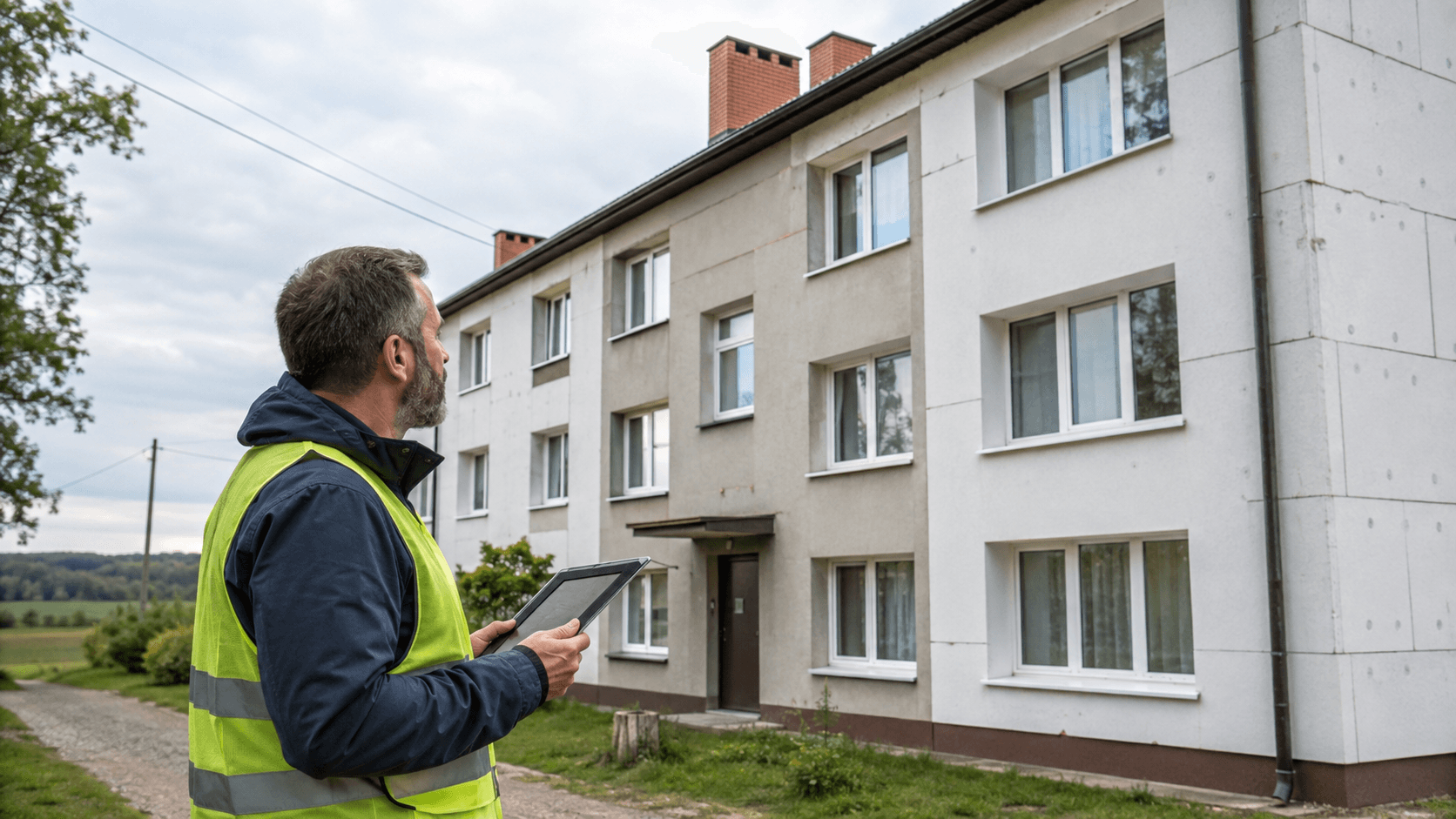
- thermal performance of walls, roofs, ceilings, floors and other building envelope elements;
- condition of windows and external doors;
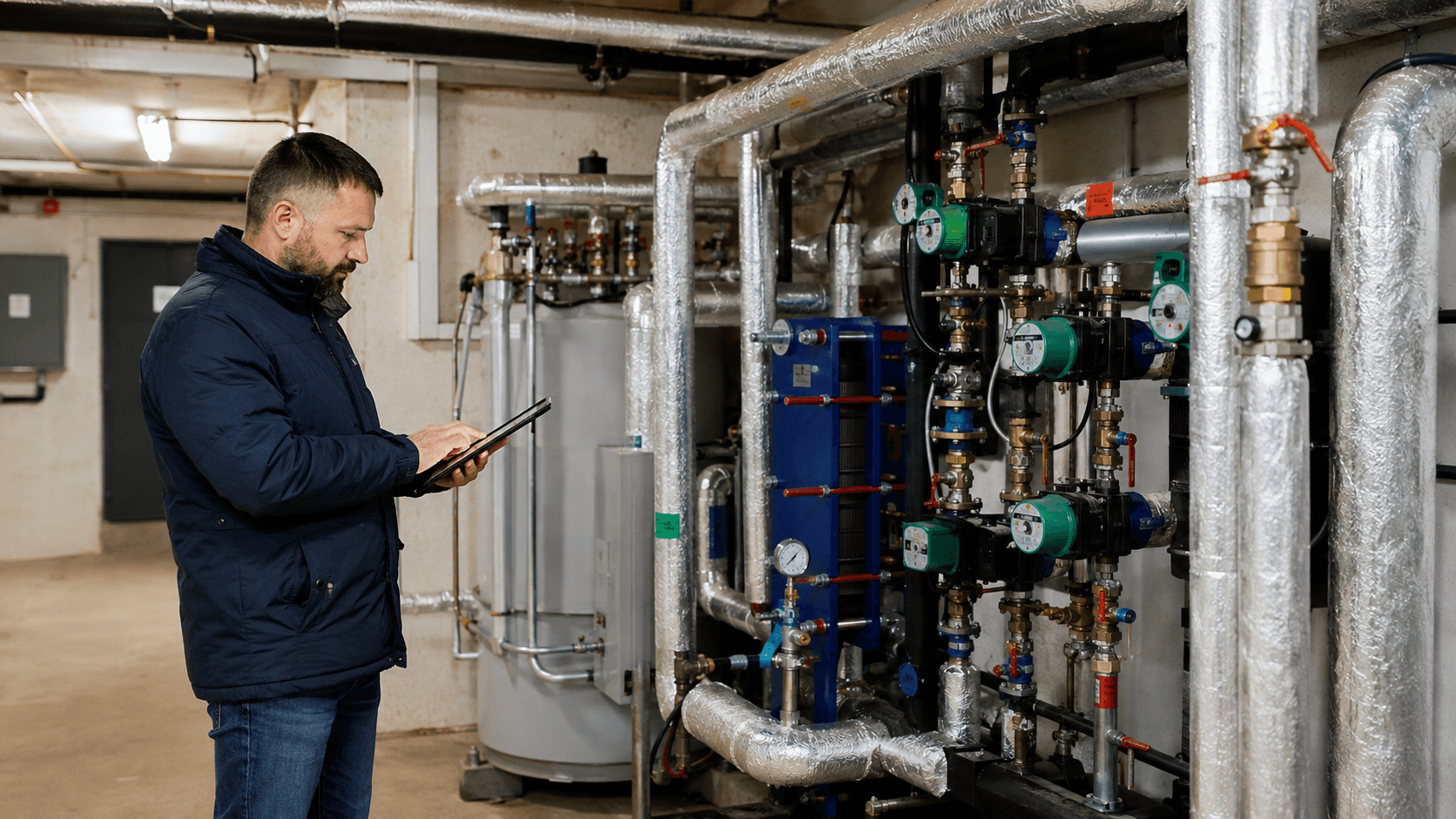
- heat source, heat substation, central heating system and domestic hot water system;
- potential for hydraulic balancing, weather-compensated controls and system control;
- ventilation, heat recovery, air-conditioning and cooling systems;
- indoor lighting and its controls;
- potential use of renewable energy sources (RES) for the building’s energy needs;
- justification for energy storage, if it is permitted under the new call;
- metering systems, automation and energy management;
- interaction between individual measures and the building’s energy balance.
Two issues need to be distinguished: an audit can already identify technically justified measures today, but their eligibility for grant funding must be checked once the new call is announced. This allows the LGU to avoid starting from scratch after the rules are published, without building the project on unconfirmed assumptions.
What data should be prepared for the energy audit?
The most time can be saved before the call by organising data for each building. In practice, it is worth preparing:
- architectural and construction documentation, floor plans, sections and floor-area data;
- information on the building envelope, year of construction and previous upgrades;
- invoices or summaries of electricity, district heating, gas and other fuel consumption – preferably covering several complete billing periods;
- information on heat sources, equipment capacity, system parameters and control methods;
- data on ventilation, air-conditioning, cooling and domestic hot water preparation;
- information on lighting, operating hours and automation;
- actual building operating hours, number of users and required indoor temperatures;
- information on planned changes to the building’s function, extensions or changes of use;
- documentation for any existing RES installation;
- technical and formal constraints, for example those resulting from heritage protection or grid connection conditions.
Not all of these documents will necessarily be required attachments to the application. They are working data needed to ensure that the audit reflects the building’s actual condition rather than assumptions adopted solely for calculation purposes.
Why compare several options instead of selecting one package of works?
One of the most important tasks of an ex-ante audit is to compare options. For the same building, for example, an envelope-upgrade option can be compared with an option that also upgrades the heat source and with a comprehensive option that additionally covers ventilation, controls and RES.
The aim is not always to select the largest investment scope. The purpose is to determine how individual measures affect energy use, operating costs, contracted capacity or capacity demand, emissions and the economics of the project as a whole. Once the call rules are published, the scoring and energy criteria for the specific call can be added to this comparison.
This approach also protects against false economies. A cheaper investment option may leave a problem that later requires further work. Conversely, an expensive option may include an element whose energy effect is small relative to the expenditure. The audit should show these relationships before detailed design work begins.
Several buildings owned by one LGU – how should an investment portfolio be prepared?
If a municipality or county is considering energy renovation of several properties, they should be prepared using one consistent methodology. This does not mean averaging their parameters. Each building should have its own energy balance and its own options; only then should the results be brought together in a portfolio table.
Useful parameters when comparing buildings include:
- annual energy consumption by energy carrier;
- energy cost and billing method;
- consumption indicators normalised for floor area and operating profile;
- condition of the building envelope and technical systems;
- potential renovation scope;
- expected energy effect of individual options;
- estimated investment cost once suitable cost assumptions have been prepared;
- the building’s documentation and formal readiness;
- interdependencies between works and implementation risks.
This makes it possible to identify which buildings are best prepared, where the savings potential is greatest and where documentation still needs to be completed before an application is submitted. If the call rules permit several properties to be combined in one project, such a comparison will also make it easier to select the scope. If separate projects are required, the prepared data will still remain useful.
What can be done before the call officially opens?
The absence of published call rules does not mean that all work should be postponed. At the planning stage, an LGU can carry out tasks that do not depend on the final parameters of the call:
- identify buildings that may be considered for renovation;
- organise the legal status and technical documentation of the properties;
- collect energy consumption and cost data;
- commission a survey and ex-ante energy audit that can be updated once the call rules are published;
- prepare technical options rather than imposing one predefined scope;
- identify required approvals, permits and potential technical constraints;
- prepare a preliminary design and implementation schedule;
- estimate the potential own contribution under several financing scenarios;
- prepare a separate document structure for each building.
The start of works, conclusion of binding works contracts or any other steps that could affect project eligibility should wait until the rules of the specific call have been checked. Rules governing the start of the project and eligibility of expenditure should be taken from the current documentation, not from previous calls.
What should be checked immediately after the new call is published?
Once the call is officially announced, the documentation should be reviewed against a single checklist:
- the call number and the competent managing body;
- the exact opening and closing dates for applications;
- the allocation;
- the maximum funding rate and required own contribution;
- the list of eligible beneficiaries and any territorial or strategic restrictions;
- project value thresholds and the method for determining project eligibility;
- required energy effects and the method used to calculate them;
- project selection criteria and scoring;
- the list of attachments, document templates and requirements for the energy audit;
- rules on cost eligibility, commencement of the investment and any possibility of combining several buildings within one project.
Only at this stage should the audit and investment option be checked against the final call rules. If the new documentation introduces different indicators, thresholds or a different method of presenting the energy effect, the audit should be supplemented accordingly rather than forcing previously adopted results to fit the new requirements.
Do the 85% funding rate and the “Zielone pogranicze” rules apply to the new call?
As of 9 September 2026, there are no grounds for assuming that they do. A funding rate of up to 85% and restrictions linked to the strategic “Zielone pogranicze” (“Green Borderland”) initiative appeared in previous FEWiM 02.01 Scheme C calls. They are therefore historical information about previous calls, not confirmed parameters of the new call added to the schedule on 8 September.
This distinction also matters when planning an LGU budget. If the historical funding rate is treated as certain at the preparation stage, the required own contribution, investment scope or ability to deliver several buildings may be estimated incorrectly. It is safer to prepare several financing scenarios and complete them once the call rules are published.
How should the audit be linked to financing preparation?
The audit and the grant application should be prepared as two connected elements of the project. The audit answers the question of what makes technical sense and what effect it delivers, while the call documentation determines which of those measures can be funded and on what terms.
If an LGU is preparing several properties, it is worth organising the financing model and schedule in parallel. Energy Trend can support both the energy analysis of buildings and financing for energy renovation – with the final scope of support always tailored to the documentation of the specific call.
The new FEWiM call should be analysed as a separate regional programme in Poland, not as a variant of NFOŚiGW programmes. Any comparison with other funding sources should be made only on the basis of their current, applicable documentation.
FAQ
Is the FEWiM 02.01 call for public buildings already open?
As of 9 September 2026, it is confirmed that a new call has been added to the FEWiM 2021–2027 schedule. The schedule is a planning document, so a separate call notice and the call rules must be checked before the final application is prepared.
Will the new call provide up to 85% funding?
This should not currently be assumed. The funding rate of up to 85% applied to previous FEWiM 02.01 Scheme C calls. The maximum funding rate for the new call must be confirmed in its documentation.
Will the new call be restricted to the “Zielone pogranicze” initiative?
This cannot be confirmed from the schedule update notice alone. Such a restriction appeared in previous calls, but it should not be carried over automatically to the new call.
Can an energy audit be prepared before the call rules are published?
Yes. A survey can be carried out, an energy balance prepared and renovation options compared. Once the call rules are published, however, the audit must be checked against the detailed requirements of the call documentation and updated if necessary.
How should several buildings owned by one municipality be prepared?
The safest approach is to collect data and carry out the analysis separately for each property, and then compare the results in one portfolio table. Whether several buildings can be combined in one application must be confirmed once the call rules are published.
Sources and information status
Information status: 9 September 2026
- European Funds for Warmia and Mazury – “Update to the call schedule”, 8 September 2026
- European Funds for Warmia and Mazury – “Schedule of calls for funding applications”
- European Funds for Warmia and Mazury – programme documents
- Previous FEWiM 02.01, Scheme C call – reference material: FEWM.02.01-IZ.00-001/26